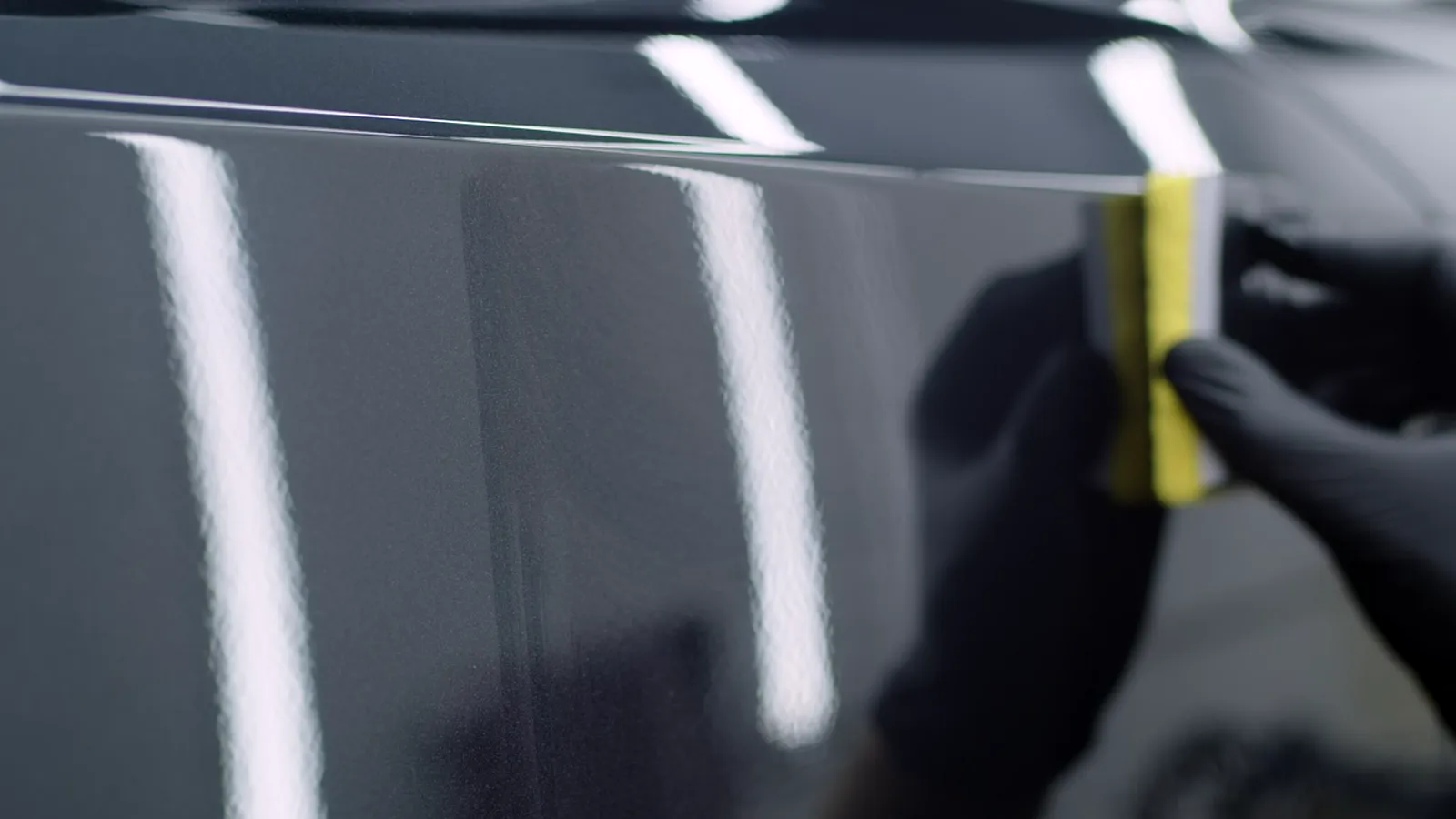
Park under a Texas midday sun and look down your paint at an angle. If you see a spiderweb of fine circular scratches lighting up around the reflection, that's swirl — thousands of micro-scratches put there by automatic washes, dirty towels, and years of well-meaning but unsafe washing. No wax, glaze, or "scratch remover in a bottle" fixes it, because the damage has physical depth. It has to be leveled.
What paint correction actually does
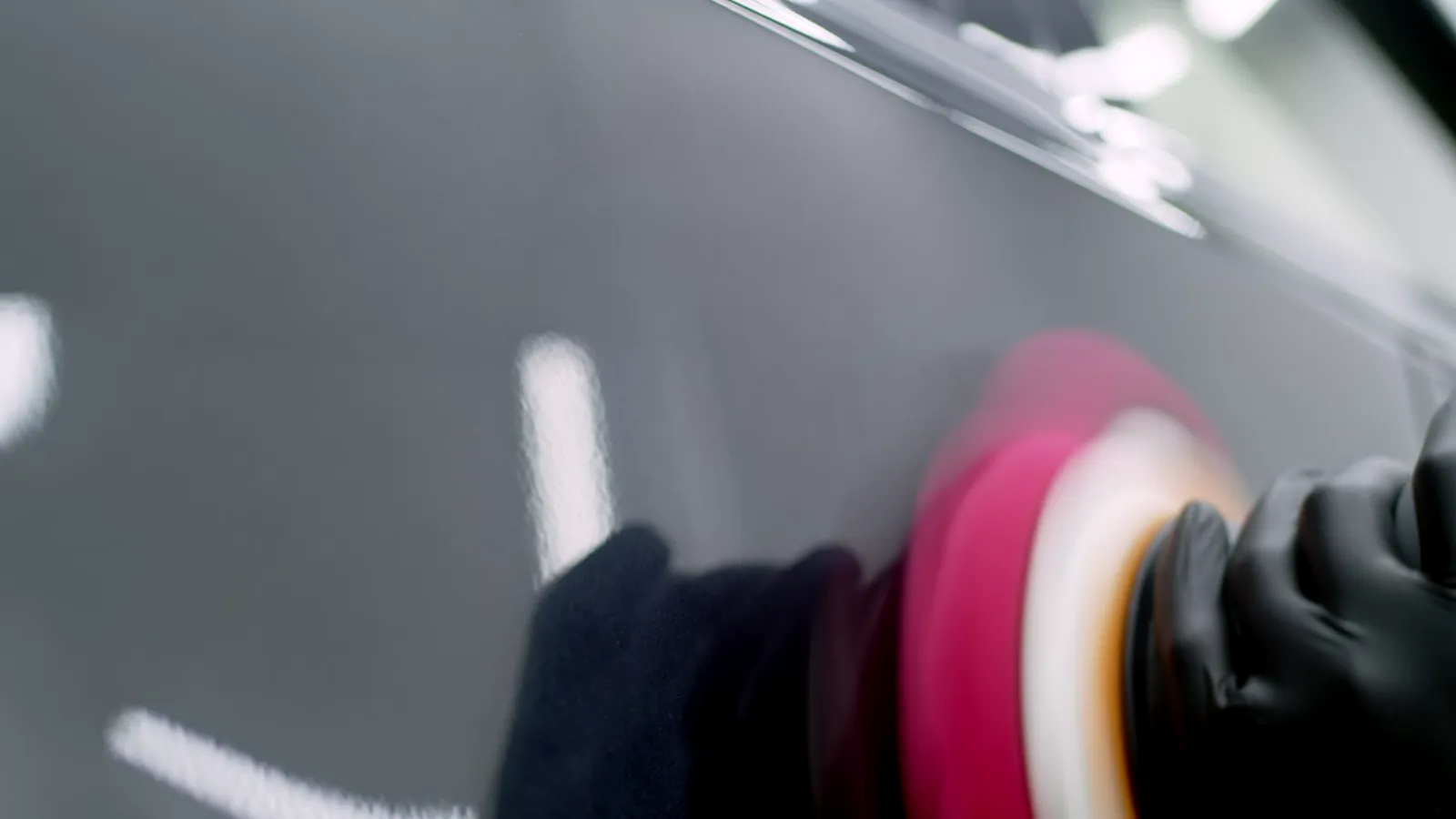
Your paint's top layer is a transparent clear coat. Swirls, light scratches, oxidation, and water-spot etching live in that layer as valleys and craters. Machine correction uses a polisher, graded abrasive compounds, and matched pads to remove a microscopic amount of clear coat — just enough to bring the surrounding surface down level with the bottom of the defects. When the surface is uniform again, light reflects cleanly, and the finish reads as deep, wet gloss instead of haze.
Cut and polish: how the stages work
- Assessment under proper light. We measure what the defects are and how deep, panel by panel. Not all damage should be chased — a deep scratch past the clear coat is a repaint conversation, and honesty about that up front is part of the service.
- Full decontamination. Wash, iron remover, and clay bar — polishing over bonded grit would grind it into the paint. (This is the same prep that anchors our exterior detail.)
- Cutting stage. A heavier compound and pad remove the defects. This is where swirls, etching, and oxidation actually leave the paint.
- Polishing stage. A finer polish refines the surface the compound left behind, removing any micro-marring and maximizing clarity and gloss. One-stage jobs stop earlier; multi-stage jobs chase perfection.
- Protection. Freshly corrected paint is bare and needs protection immediately — a sealant at minimum, or ideally a ceramic coating to lock in the result for years.
Setting expectations honestly
Correction is a craft with real limits, and a straight answer beats a shiny promise. A single-stage polish typically removes the majority of visible swirl and dramatically sharpens gloss; multi-stage correction chases deeper defects. Scratches that catch a fingernail usually run through the clear coat and can be improved but not erased. Clear coat is finite — correction removes a little of it each time, which is exactly why protecting corrected paint matters, and why "just buff it" every year is the wrong strategy.
Why it matters in North Texas
The sun that bakes this region is also a permanent spotlight on every defect — swirls that hide on a cloudy day glow at a Mansfield stoplight in July. Hard-water etching from sprinklers adds craters on top. Correction is how a black truck gets that liquid, mirror look back, and it's the mandatory foundation under any serious coating job.
Book a paint correction assessment — tell us the vehicle, the color, and what you see in the sun, and we'll scope the right level of correction. Serving Mansfield, Arlington, Kennedale, Burleson, and Midlothian.